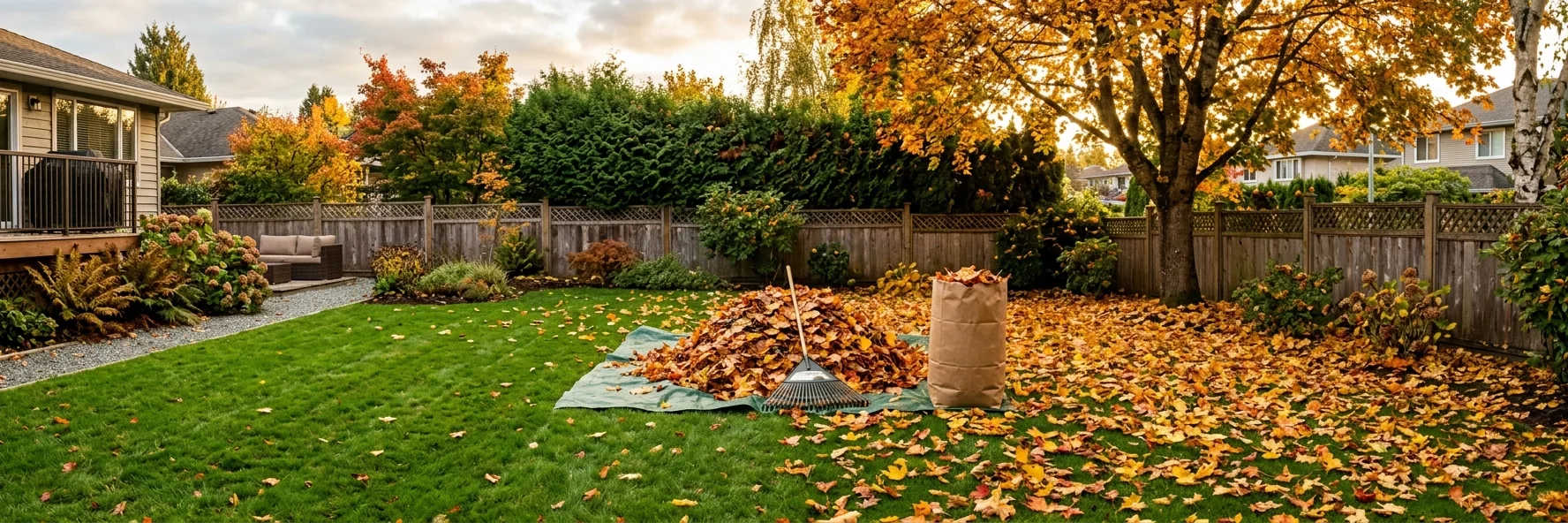
Fall in the Lower Mainland means a few weeks of falling leaves followed by months of rain. A couple of weekends of work now, before the wet sets in, saves you a soggy, mossy mess in spring. Here's what to do, roughly in order.
September to early October
Aerate and overseed the lawn. Early fall is the best time of year for it. The soil is still warm, the rain is coming back and the weeds are slowing down. Aerating relieves the compaction from summer, and fresh seed fills thin patches before moss can move in.
Lime if your soil is acidic. Our rain leaches the soil, and moss loves acidic ground. A soil test from a garden centre tells you whether lime will help.
Fertilize with a fall blend. A lower-nitrogen fall fertilizer helps roots get through winter without pushing soft top growth.
October to November
Keep leaves off the lawn. A thick layer of wet maple leaves smothers grass in a couple of weeks and leaves dead, mossy patches. Rake or mulch-mow them every week or two while they're falling.
Use the leaves. Shredded leaves make great mulch for beds. Whatever you don't use goes in the green bin. Please don't dump yard waste into ravines, creeks or green spaces.
Clear gutters and downspouts. Once the leaves are mostly down, clean the gutters and check that every downspout drains away from the house. This is the single cheapest way to prevent winter water problems.
Clear the storm drain out front. Leaves pile up on street catch basins and cause flooding at the curb. If there's one in front of your house, keep it clear after big leaf drops.
Blow out the irrigation system. If you have an in-ground sprinkler system, have it winterized before the first hard frost. A cracked backflow valve or pipe is an expensive spring surprise.
Mow one last time. Give the lawn a final cut a little shorter than usual before growth stops. Long grass flattens under rain and invites mould.
In the beds
- Cut back perennials that turn to mush, like hostas and daylilies
- Leave seed heads on grasses, coneflowers and sedums for birds and winter interest
- Pull weeds now so they don't seed over winter
- Top up mulch to protect roots and keep the soil from washing
- Plant spring bulbs and divide crowded perennials
- Move tender pots against the house or into the garage
Trees and shrubs
Fall storms bring down weak branches. Look for dead, cracked or hanging limbs over the house, driveway or power lines, and have them dealt with before the winter winds. Don't do big pruning on spring-flowering shrubs like rhododendrons now, or you'll cut off next year's flowers. For hedges, see when to trim cedar hedges.
Watch the first big rain
The first heavy rainstorm of the season is the best time to spot drainage problems. Put on a jacket and walk the yard. Where does water pool? Does it run toward the house? Note it down. Our guide on fixing drainage now or in spring explains what to do next.
Clean up and store tools
Drain the gas from the mower or run it dry, clean the blades, coil hoses and store them out of the frost. You'll thank yourself in April.
Rather hand it off?
A professional fall cleanup on an average lot usually runs $300 to $900, depending on how many leaves, how many beds and whether the debris is hauled away. Many companies also offer a two-visit package: one mid-fall, one after the last leaves drop.
Send one request and compare quotes for a fall yard cleanup in Surrey, Burnaby, Maple Ridge and across the Lower Mainland.